HELLO!!
It has been a busy few weeks since my last blog! At the end of June, my sister in law was diagnosed with glioblastoma (a rare and aggressive brain cancer.) She passed away peacefully on July 12. The memorial service was 7/23/22. I photographed a wedding on 7/23/22, It was a sad and happy day of endings and beginnings. I have also been busy preparing for my daughter's baby shower. I'm the hostess. And it has to be as perfect as possible. I am making all decorations. Time passed quickly and I realized I have not posted my blog. Although it was written.
***********************************************************************************
“With integrity you have nothing to fear, since you have nothing to hide. With integrity you do the right thing, so you will have no guilt” by Zig Ziglar.
Self-esteem
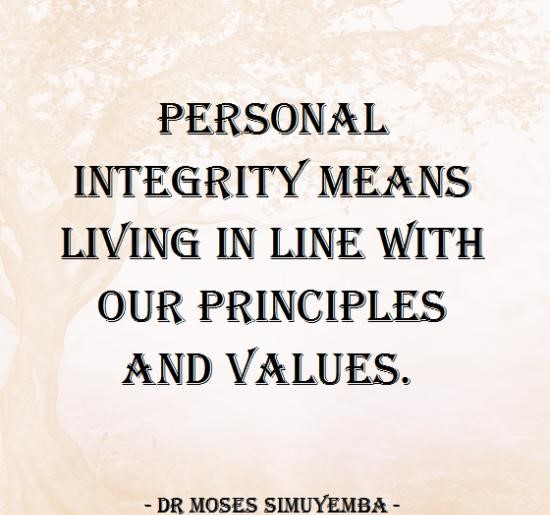
and integrity go hand in hand. Integrity means we practice what we
preach. Integrity means keeping our promises, honoring our
commitments and treating others fairly. Integrity means we aim for
moral consistency in our lives. When we behave with integrity, we
increase our self-esteem.
Nathaniel
Branden, author of The
Six Pillars of Self-Esteem,
defines
integrity as “the
integration of ideals, convictions, standards, beliefs, and behavior.
When our behavior is congruent with our professed values, when ideals
and practice match up, we have integrity”.
Based
on this definition, we could say that we have personal integrity when
we act
in accordance with our values, morals, and beliefs.
If we believe we should act a certain way, but do the exact opposite,
it’s likely that we will feel disharmony with ourselves. It’s a
disagreeable feeling that conflicts with our self-awareness.
The
ability to achieve this harmony relies on knowing your principles,
values, convictions, and ideals - your
personal values,
not those that you were brought up with or that someone else has
tried to impose on you. It
does not matter what family members, friends, or colleagues tell you.
Defining your personal values has to do with being honest with
yourself, and is the result of internal self-exploration.
We
may have been raised in an environment where the boundaries of what
is right or wrong are blurred. We may not have been taught to make
good judgments. But as adults with our decision-making abilities
fully developed, we will soon experience the impact of our decisions
and behavior. As adults we are in a better position to judge whether
our value system is serving us or whether we need to change it.
One
good gauge when making decisions around self-esteem would be: would
your decision or actions truly hurt or enhance your level of
self-esteem? Would it cause you a tinge of guilt? Would you
rationalize about your behavior? We need to be aware that we always
have a choice in what we decide and that the final responsibility
rests with us. As a result we need to know what is within our
personal power and what not.
Self-esteem
marks every single decision we make, with repercussions for our
health and well-being. It will determine your life in every aspect -
work, social, recreation, etc. Self-esteem becomes evident in all
these areas by means of an
essential element -our attitude.
It’s
essential to life to have healthy self-esteem. To achieve that, we
need to work on all our personal areas. However, it’s vital to
develop the area of personal integrity, since the
more our lives are in congruent with our values, the healthier our
self-esteem will be.
When
we act in accordance with our convictions, our conscience is at peace
and it’s
easier for this tranquil mental state to affect other areas of our
lives, reinforcing a healthy level of self-esteem. When
our self-esteem is at a healthy level, we accept ourselves for who we
are and appreciate our own worth.
Integrity
guides the person who holds the door for the next person rather than
pretending they don’t see them. Integrity strengthens the person
who speaks up when others can’t find their voice. Integrity is what
allows us to apologize with grace when we’re in the wrong. Without
integrity it’s hard to figure out where we are and what we value.
Our own internal sense of ourselves can get lost in the popular
culture values.
“We
emerge into the light not by denying our pain, but by walking through
it.
―
Joan
Borysenko
Holding
the door open for someone shifts from an acknowledgment of the other
person’s humanness to telling ourselves that “I am a good person
because I held the door open and didn’t ignore the other person”.
But, did I see the other person’s eyes, or did I hold the door open
with your back turned?
These
are the bigger outward gestures of integrity. We receive a sense of
satisfaction or pride or peace or something else when you share your
generosity of spirit with others. This helps to build self-esteem.
But,
there are times when our own personal sense of integrity becomes
clouded. Sometimes we may know when we are actively deceiving
yourself. Other times it may be less clear.
Many
of us have experienced trauma, especially in childhood, where the
effects are complicated, long-lasting and left us with the false
impression of who we are because we were treated badly. This
impression is often carried into adulthood.
Sometimes
it might feel as though we are being swept up in a wave of uncomfortable emotions. With a perspective of integrity and looking
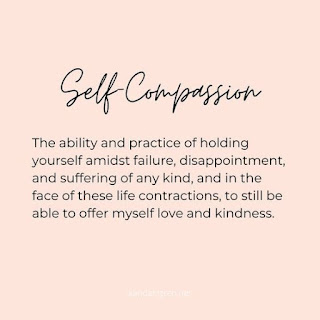
at ourselves clearly as we are - with kindness and compassion - the
likelihood of this happening is greatly reduced. It is uncomfortable
to be honest with ourselves. It’s not easy to say, “Ouch! I don’t
want to be that person I just was.” And yet, it is really the only
way to own our hard-earned self-esteem and become more fully who we
need to be.
The
beauty of acknowledging personal integrity with all of the benefits
of welcomed positive benefits, is that it is also a way of
allowing ourselves to acknowledge our imperfections, with less and
less judgment. Self-esteem
built on the foundation of integrity gives us the confidence to
increase our awareness of ourselves, so we can understand ourselves
without judgment.
“Who
looks outside, dreams; who looks inside, awakes.”
–
Carl Gustav Jung
Give
yourself 5–10 minutes every day to answer these questions,
- Are
my goals, attitude and actions in alignment with my personal
integrity?
Where are
the places I need to re-adjust and step more fully into whom I’m
meant to be?
When you
become frustrated with yourself because you’re not doing what you
would like to be doing or something isn’t working out the way you
thought it would, you have a choice to make.
- You
can go down the road of blaming and shaming yourself which results
in feeling like there’s something fundamentally wrong with you.
- You
can go down the road of blaming others which results in getting
angry and not being able to see your choices.
- You
can open yourself up to looking at the situation as multifaceted.
There are many ways to look at a situation and interpret what’s
happened. You might find a different reason than you thought and
that can lead to thinking about problems in new ways. You can look
at where you’re responsible and where you’re not and what you
need to do to improve the situation.
Integrity
is difficult. The quality that results from it is worth the trouble.
When we acknowledge the other person, that they are worthy of your
time and attention, even in the simple gesture of holding the door,
we acknowledge our own worthiness. We need to take the time to “get
on the right side” of ourselves. Our relationship with ourselves is
worth it and our relationship with others will grow as a result of
the relationship with ourselves.
“The
relationship that you’re having with another person is the same one
that you’re having with yourself.”
Tracey
McMillan
McMillan
also states, “our relationships mirror back our deepest, most
unconscious beliefs about ourselves.”
Ask
yourself, “What relationship was I having with myself during my
most tumultuous relationship years? What did I unconsciously believe
in myself?”
When
I was in my late teens/early 20's, I knew I wanted to feel a
connection, but I wouldn’t let anyone close enough, although I
didn’t see it that way. My perception was, ”he’s not interested
in me”, 'he chose someone else over me”, “no one wants me”,
and many more self-hatred thoughts. This began a long running theme
in my life — “I’m not good enough.” and “I’m not
worthy.”
Looking
at it through McMillan’s lens, if that was the relationship I was
having with myself, it’s no wonder I then attracted my next several
relationships (and they all looked the same). I wasn’t a priority;
I wasn't the one. All evidence confirmed my sense of self-worth.

As
I look back, I view those years of my life as an abnormality — a
weird time when I abandoned my values and lost all integrity. Suppose
I allowed it to happen because I didn’t think I deserved better.
Maybe I settled for an unacceptable situation because I wasn’t
accepting of myself. Riddled with pain, guilt, and shame from those
years, and those decisions, I shut down and put a wall around my
heart. In hindsight, it's no surprise that my relationships then
were always with someone equally as emotionally unavailable. I dove
heart first into those relationships, and gave each one all that I
was capable of giving. And I lost myself completely trying to make
it work. One day I woke up and realized that I was attracting men
who didn’t know how to love because I didn’t know how to love
myself.
McMillan
drops another self-reflection bomb — she said, “we
unknowingly seek out what we need to heal, and that’s why we can
trust our mistakes.” Trust our mistakes? That’s not a
common thought. We often let our mistakes define us. I know I have.
What
if our mistakes are signs pointing toward what we need to work on?
What if our mistakes are an opportunity to see and confront
our relationship with ourselves?
In that regard, are they
mistakes?
Or are they necessary evils?
What if our
mistakes aren’t meant to define us, but instead to guide us toward
our hearts?
And maybe personal integrity is seeing them for
what they are — lessons, and remember, that to get it "right"
so to speak, takes practice.
Each
past relationship reflected the broader issues within me that I had
to confront, as if each layer was a layer I had to pull back and
explore, until I finally got back to the me I am meant to be.
There
is an old saying that goes something like this: "People
who respect themselves are people of integrity, and only people with
integrity can respect themselves."
Self-esteem is the partner of integrity. An individual lacking
integrity has poor self-esteem. Going against and violating our moral
and values slowly chips away at our self-esteem, leaving us less and
less able to make healthy choices. When our integrity is defended,
self-esteem is enhanced, so exercising strong moral judgment builds
self-esteem.
Each
time we don’t keep a promise to ourselves or behave in some way
that goes against our values we fall further out of self-integrity.
We tell ourselves is okay to say one thing and do another, because “I
don't do it all the time.” It become routine. And while sometimes
we need to cut ourselves a break, because we all make mistakes, if
this self-dishonesty becomes a common occurrence in our lives it
needs to be dealt with.
8
ways that you can rebuild your self-integrity and start keeping
promises to yourself:
- Identify
and define your values:
In order to know when you have fallen out of alignment with your
values you must first identify them. Make a list of the things you
value in your life, what you stand for, the things you can’t live
without. Examples include – family, love, kindness, health,
compassion, respect, loyalty, contribution. Now define those values.
What do they mean to you and what do they look like in application?
- Be
mindful of your thoughts:
Your thoughts shape your actions, so it is important to become aware
of when your thoughts start to lose touch with your values, because
your actions are soon to follow. This is a moment by moment process
and a lifelong endeavor. When you catch yourself being Negative
Nancy in your head, tell yourself, “That’s not me” and remind
yourself of your values and what you stand for.
- When
you say you are going to do something, do it! No
matter how small the promise, it must be kept if you are to build
your self-integrity. If you don’t feel like you are capable of
keeping a promise or commitment, then don’t make it. Be honest
with yourself and what you are capable of. Build momentum with small
victories, and then set your sights higher.
- Commit
fully and be satisfied with your effort regardless of the outcome.
Sometimes
the thing holding us back from keeping our promises to ourselves is
the fear of failure. We fear that if we actually give our full
effort and don’t succeed then we will look stupid and feel awful.
However, it is much more admirable to give your full heart to
something and it not work out, than give it half of your energy and
then claim that you didn’t care about it anyway once you fail.
Learn to commit fully and value effort over the end result and you
will experience satisfaction regardless of the outcome.
- Expect
nothing in return. Align
your actions with your values regardless of whether or not you are
rewarded for your efforts. Most of the time the only reward you will
receive is the satisfaction of knowing that you remained true to
yourself and that is enough.
- Create
a schedule:
what doesn't get scheduled doesn't get done. Write down all the
things you need to get done or the steps to take either to build up
your personal or professional skills. After writing these down, take
out a calendar and schedule a time to accomplish certain actions or
to work on each of the to do items on your list. Keeping in mind
that what doesn't get schedules doesn't get done.
- Have
an accountability partner:
If you have faltered numerous times on the promises made to yourself
or even to others, it shows you are not capable to holding yourself
accountable - get an accountability partner. An accountability
partner will serve as a listening ear when you get overwhelmed with
the task on hand and need to talk things out. An accountability
partner will help keep you on track, highlight your blind spots,
call you out and be your cheerleader-cheering and encouraging you
all the way.
- Celebrate
every little accomplishment:
At the end of each day write down all the successes you achieved
that day regardless of how small or insignificant they may seem. For
example, getting out of bed when the alarm goes off, submitting an
assignment on time without asking for an extension, eating a piece
of fruit instead of a cookie when dieting. Celebrating little
successes will boost up your self-esteem and would propel you to
respect the other promises made to yourself, to treat yourself with
a little more respect and dignity.
Leave me a comment and let me know if you struggle with integrity. Please subscribe!
https://linktr.ee/deelitefulphotography

%20-%20Edited.png)
.jpg)


.png)
.png)
.png)

.png)
.png)

.png)
.png)

.png)
.png)
.png)
.png)