Showing posts with label Self-love. Show all posts

Saturday, March 11, 2023

Self Awareness is Key to Self Love


Self-awareness and self-love are closely correlated. When we are aware of our thoughts, emotions, and actions, we can better understand our strengths and weaknesses, and we can learn to appreciate and love ourselves more fully. Self-awareness is the foundation of self-love, and both are essential for a healthy and fulfilling life.

What is Self-Awareness?

Self-awareness is the ability to recognize and understand your emotions, thoughts, and behaviors. It involves being honest with self about our strengths and weaknesses, our likes and dislikes, and our values and beliefs. Self-awareness allows us to take responsibility for our actions and to make choices that align with our goals and values.


How to Become More Self-Aware?

There are several ways to become more self-aware, including:

  1. Mindfulness: Mindfulness is the practice of being present in the moment and observing our thoughts, feelings, and bodily sensations without judgment. It can help us become more aware of our inner experiences and develop a deeper understanding of self.

  2. Reflection: Taking time to reflect on our experiences and emotions can help us identify patterns in our behavior and understand our motivations.

  3. Feedback: Seeking feedback from others can provide valuable insights into our strengths and weaknesses, and help us become more aware of how our actions impact others.

  4. Journaling: Writing down our thoughts and emotions can help us process them and gain a deeper understanding of ourselves.

How Does Self-Awareness Relate to Self-Love?

Self-awareness is a key component of self-love because it allows us to identify and appreciate your strengths and weaknesses. When we are aware of our thoughts and emotions, we can acknowledge them without judgment and learn to love ourselves more fully. Self-love involves accepting and embracing all aspects of ourselves, including our flaws and imperfections.


How to Increase Self-Love Through Self-Awareness?

  1. Practice Self-Compassion: Self-compassion involves treating yourself with kindness, understanding, and forgiveness. When we make a mistake or experience a setback, practice self-compassion by reminding ourselves that everyone makes mistakes and that it is okay to be imperfect.

  2. Identify Our Values: Identifying our values and living in alignment with them can help us feel more fulfilled and confident in ourselves.

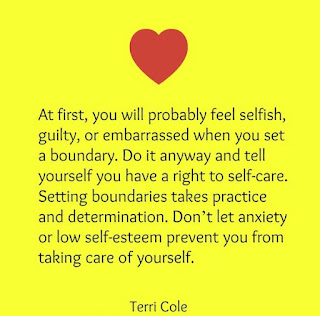
  3. Set Boundaries: Setting boundaries with others and ourselves can help us prioritize our needs and values, and protect our emotional well-being.

  4. Focus on Our Strengths: When we focus on our strengths and accomplishments, we can boost our self-esteem and cultivate a more positive self-image.

Self-awareness and self-love are intertwined. Developing self-awareness can help us better understand and appreciate ourselves, while self-love involves accepting and embracing all aspects of ourselves. By practicing mindfulness, reflection, seeking feedback, and journaling, we can become more self-aware. To increase self-love, practice self-compassion, identify our values, set boundaries, and focus on our strengths. Remember, developing self-awareness and self-love takes time and practice, but the rewards are well worth it.


Thank you for stopping by and reading! 

Leave me a comment with your thoughts on this blog. 


https://linktr.ee/deelitefulphotography

Thursday, March 2, 2023

Self Love and Boundaries

In a world that often demands too much from us, setting boundaries and practicing self-love can be incredibly empowering. It's important to remember that you have the right to prioritize your own well-being and to say "no" to anything that does not align with your values, goals, or needs.

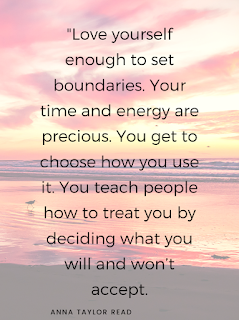
Setting boundaries is crucial in maintaining healthy relationships, both with yourself and with others. Boundaries help to create a sense of safety, respect, and balance in your life. They can take many forms, such as limiting your availability, saying "no" to requests that feel overwhelming, or communicating your needs and expectations clearly. Remember that setting boundaries is not a sign of weakness, but rather a demonstration of self-respect and self-care.


Self-love is also essential to your overall well-being. It means recognizing and accepting all parts of yourself, including your flaws and imperfections. It means treating yourself with kindness, compassion, and forgiveness, and prioritizing activities and habits that bring you joy and fulfillment. Self-love is not about being perfect, but rather about recognizing your worth and value as a human being.

Here are some tips to help you set boundaries and practice self-love:

  1. Get clear on your values and priorities: When you know what matters most to you, it becomes easier to set boundaries that align with your goals and needs.

  2. Practice saying "no": Saying "no" can be difficult, but it's an important skill to develop. Remember that it's okay to prioritize your own needs and to decline requests that don't feel right for you.

  3. Communicate your boundaries clearly: When setting boundaries with others, be clear and direct about your expectations. Use "I" statements to communicate how certain behaviors or actions make you feel, and express what you need in order to feel respected and safe.

  4. Make time for self-care: Self-care means taking intentional time to nurture your mind, body, and spirit. This can look different for everyone, but might include things like exercise, meditation, spending time in nature, or engaging in creative activities.

  5. Surround yourself with supportive people: Having a strong support system is crucial for maintaining boundaries and practicing self-love. Seek out people who respect your boundaries and uplift you, rather than draining your energy or making you feel small.

  6. Learn to recognize and manage your emotions: Emotions are a natural part of life, but they can also be challenging to navigate. Take time to reflect on your emotional triggers and develop strategies for managing them. This might include techniques like deep breathing, journaling, or speaking with a therapist.

  7. Practice self-compassion: When you make mistakes or experience setbacks, it's easy to be hard on yourself. However, self-compassion involves treating yourself with the same kindness and understanding that you would offer to a friend. Remind yourself that it's okay to be imperfect and that you are doing the best you can.

  8. Set realistic expectations for yourself: It's important to challenge yourself and set goals that align with your values, but it's also important to be realistic. Avoid setting yourself up for failure by setting goals that are too lofty or unrealistic. Instead, break larger goals down into smaller, more achievable steps.

  9. Practice gratitude: Gratitude involves focusing on the positive aspects of your life and cultivating a sense of appreciation for what you have. This can help to shift your mindset away from negativity and cultivate a more positive outlook.

  10. Celebrate your successes: When you achieve a goal or make progress towards a larger goal, take time to celebrate your success. This can involve treating yourself to something special, sharing your success with others, or simply taking a moment to reflect on your progress.

  11. Remember that setting boundaries and practicing self-love are ongoing processes. It takes time, patience, and persistence to develop these skills, but the benefits are well worth it. By prioritizing your own well-being, you can create a life that feels fulfilling, balanced, and joyful. You deserve nothing less than that.


Setting boundaries and practicing self-love are essential to maintaining a healthy and fulfilling life.

As women, it's important to prioritize our own well-being and recognize that we have the right to say "no" and establish healthy relationships. By setting boundaries, practicing self-love, and developing a strong support system, we can create a life that feels balanced, joyful, and fulfilling.

Remember to be patient with yourself, celebrate your successes, and show yourself compassion and kindness along the way. You deserve to live a life that feels authentic and true to your values, and setting boundaries and practicing self-love are important steps in achieving that.


Thanks for stopping by! leave me a comment below.

https://linktr.ee/deelitefulphotography


Saturday, July 16, 2022

Self Love Means Making Yourself a Priority


When was the last time you told yourself that you are enough? How about the last time you did something just for you?

Loving ourselves is not always the easiest task. Many of us find it’s much easier and simpler to put our time and energy towards friends and family than it is to love ourselves.

I want place more importance on my own self love. And to show others how essential it is to invest in the relationship with themselves because we are the only people in charge of our own happiness.


Many of us fail to prioritize ourselves – we often place the needs of others before our own, which means when life gets busy, we end up compromising our own beliefs and desires. The saying “you can’t pour from an empty cup” couldn’t be more fitting. More often than not, our well-being takes a backseat as we go about our day checking off our to-do lists, prioritizing others' needs over our own.

When you fly, if you’re traveling with someone who you’re caring for, you’re instructed to put on our own oxygen mask first before helping others secure theirs. We are no good to anyone passed out on the floor, let alone ourselves.


Prioritizing ourselves means we are giving ourselves time and attention to focus on our needs, desires, goals, and wants. It also means we give ourselves the same compassion, understanding, and priority that we do to other people.

When we consider what we need in life to feel good about ourselves – whether its having a hobby, joining a team, assessing our values, etc.–we will love ourselves first. It is so important to love ourselves first. When we love ourselves we chase the things we deserve and let go of what doesn’t bring we joy.


Loving ourselves means having the self-respect to say goodbye to people bringing we down. It involves forcing ourselves to go after the things we want most in life. It means ignoring the critics because haters gonna hate but they won’t bring we down. When we love ourselves we exude confidence and only then can we really be selfless.

Sometimes these practices take time, but little habits create big changes when we do them every day. At the end of the day, remember this: to give our best, we have to feel our best. Invest in ourselves, spend time doing what we love, and be kind and compassionate when we make mistakes. we are deserving of all the love and attention in the world.


Self-care does not have to be a lavish and expensive priority. It can be as simple as turning our phone on silent to read our new book or enjoying a cup of hot tea after a long day. We deserve to allow ourselves to find something that brings us joy every day and make it a priority.

Practicing self-love isn't a “one and done” event. It takes time and consistency to cultivate a new attitude towards self-worth and growth. Allow ourselves to be present each day and proud of the small victories.  We must make ourselves a priority to give ourselves the time to be present for ourselves.


With social media, it is becoming easier and easier to compare our life to others in just a single post. It is crucial to remind ourselves daily that each person has their own specific path in life and no two paths look the same. Taking a break from social media at times can be a good practice of self-love as well.

Self-love means prioritizing surrounding ourselves with people that care about us and make us smile. As obvious as this sounds, it is easy to ignore this practice altogether. Take a moment to go through the people that are closest to us and determine if they make we smile on a daily basis. If we are finding it hard to determine if they do or not, it is time to do what is best for we and our health. If these people do not make us feel loved, supported, cared for, and make us smile, it it time to eliminate these people from our lives – EVEN if they are family.


Making ourselves a priority means focusing more on the things we love. This practice looks different for everyone. Write down a list of the top five things that make you happy. This can be hobbies, people, and/or events that bring you the most joy in a healthy, positive and worthwhile way. Once you determine your favorite people, places, events, and/or hobbies, plan out your days to participate in them. Allow yourself the time to do more things you love and you will find a more balanced and fulfilled, worthwhile, life.

Making time for ourselves is vitally important in any relationship. Without the ability to focus on ourselves, it’s easy to fall into unhealthy patterns of codependency and lose our sense of identity. Ultimately, our relationship with our own head and heart are the most crucial ones to nurture, and these will affect all other relationships in our lives, whether they be romantic, platonic or familial. Healthy boundaries, open communication and prioritizing alone time are key ingredients to a strong relationship.


This can be a tricky balance in the best of times, but since the beginning of the pandemic and many people transitioning to working from home, this has put an immense amount of added stress on romantic relationships. When living with your partner, it can be very difficult to protect your alone time when you’re both at home constantly. And even if you don’t live together, with the limited number of activities available and the lowered number of people we’re allowed to see these days, setting aside time for self-love and growth outside of your partnership has even less of a road map than it did before.

But the added challenge of creating time for ourselves in today’s climate of external strains means that it’s just as crucial, if not more so, for both our mental health and the health of our relationships to make ourselves and self care a priority. While every relationship dynamic is different, it is invaluable to prioritize ourselves when you’re in a partnership.

If we observe our daily routine, we will find that there are countless things that steal our “self-care” time and make us feel miserable. Do not let technology keep you from appreciating the beautiful gifts that life has for you. Time that is dedicated to ourselves will bring us even closer to our inner person. We can listen to music, take a walk alone, write stories, daydream or just sit quietly for a few minutes, just as long as we are just being with ourselves.

It is said, “success makes us feel great but failures bring along an eternal feeling of satisfaction when we love ourselves.” When we love being us and celebrate our love for ourselves every single moment, our inner happiness does not depend upon our success or failure, as we are always able to treat ourselves as our own best friend. We live a complete life that has a perfect balance of everything we need to be an overall developed individual.


We must not ignore our inner calling. Our inner voice guides us the best since no us knows better than us. It may be difficult to make a decision when we get stuck in life but when we follow our instincts, life gives us a way of realizing our dreams and happiness. When we listen to our own hearts, we will rarely regret our decisions, even when we face setbacks.

A little shift in our attitude towards prioritizing ourselves can actually bring us closer to success and happiness. The secret of a happy and a healthy life is loving ourselves the way we are regardless of anything else.


Here are some suggestions for becoming more of a priority in your life:

  • Make time for YOU. Schedule it. Put it on your calendar. Make it a date.

  • Practice self-compassion – be kind to yourself, speak kind to yourself.

  • STOP feeling guilty – for saying no, for turning down invitations and for changing your mind.

  • Practice saying NO – practice with a friend you trust. Say no to things you don't want to do.

  • Learn to love your imperfections – accept them, embrace them. They aren't going anywhere. Make peace with them.

  • It's ok to ask for help – asking for help is a sign of strength – not a sign of weakness.

  • Let go of the need for control – control is an illusion. The only thing any of us have control of is ourselves.

  • Embrace your emotions – emotions are what make us human, vulnerable, and alive.

  • Surround yourself with encouraging, positive people – negative people are energy draining. And encouraging, positive people are energy giving.

  • Start a Gratitude Journal – this has been my greatest strength. There is always something to be grateful for – write it down.

  • Believe you are more than enough - At the end of the day, you are and have always been more than enough


Prioritizing yourself is more than just saying all the right words and pampering yourself, but it's knowing what you need and deserve every day. This means saying no when someone is disrespecting your boundaries or when you're getting close to being burned out.

It's taking short breaks when you're feeling drained and it's taking the time to reflect inward.

Prioritizing yourself is knowing who you are and being content with spending time with yourself because it's how you recharge your energy.


I hope this touched you as deeply as it touched me while I wrote it.  Make yourself a priority. Make time for yourself. It's okay to unplug! 

Please leave me your thoughts and comments below. I would greatly appreciate it! And don't forget to subscribe so you are notified when a new blog is posted. 


Deeliteful Photography

Thursday, June 23, 2022

Self Appreciation

You’re either self-appreciating or self-depreciating. There is no middle.”― Lana M. H. Wilder

What is Self-Appreciation?


  • Self-appreciation is the process of appreciating yourself.
  • Appreciating yourself is about being grateful for yourself.
  • Self-Appreciation is not self-esteem,  it’s not about feeling special but accepting our uniqueness instead.
  • Self appreciation is saying thank you to ourselves, for all the things that we usually compliment others. 
  • Self appreciation, means we appreciate ourselves not because we’re better than others, but because all people possess goodness.
  • Self Appreciation is about consciously acknowledging the positive within us, without the need to compare ourselves to others.
  • Self-appreciation can change our life by transforming negative beliefs of ourselves into positive and nurturing beliefs.


I believe looking within is the first step whenever I find myself at a crossroads of decision-making. I, as well as many of us, ask ourselves, “I am doing the right thing?” or “Am I capable of doing this thing or not?”


Sometimes it’s more difficult to see what’s right about ourselves than what’s wrong. For some of us even thinking about our positive traits makes us uncomfortable. Praise and compliments make us squirm, and we have no idea how to respond without feeling self-conscious. Flattery feels a lot better than insults, but how many of us really take the praise in? Own it. Feel it. Delight in it. For many reasons, it’s often more difficult for us to feel positively about ourselves. Much of this stems from fear.  One fear involves setting up high expectations of ourselves and others. Minimizing our positive traits means that we’re more likely to pleasantly surprise others by doing well rather than disappoint them by doing poorly. If we’re in the habit of putting ourselves down, recognition of our positive qualities will feel foreign to us. Another fear is the perception of being vain.


So how do we celebrate our admirable qualities in a healthy way? I believe the answer is self-compassion, which involves treating ourselves with kindness, a sense of common humanity, and mindfulness when considering our perceived inadequacies — though in a different guise. I like to call it “self-appreciation.” When we can enjoy what’s good about ourselves, acknowledging that all people have strengths as well as weaknesses, we allow ourselves to revel in our goodness without evoking feelings of arrogance or overconfidence.


We need to consider kindness as it applies to self-appreciation. Would you take your friends’ good qualities for granted without ever acknowledging them or letting your friends know what you like about them? Probably not, yet many of us do so to ourselves.


It’s a great gift of self-kindness to appreciate ourselves and to demonstrate our approval with sincere praise. We don’t have to speak this praise aloud, making ourselves and others uncomfortable in the process. But we can quietly give ourselves the inner acknowledgment we deserve.


The sense of common humanity inherent to self-appreciation means that we appreciate ourselves not because we’re better than others, but because all people have goodness in them. To appreciate others’ goodness while ignoring our own creates a false division between us and them. It creates a sense of "better than" or "less than".


Celebrating our achievements is no more self-centered than having compassion for our failings. We can’t really claim personal responsibility for our gifts and talents. They were born from our genetics, the love and nurturing of our parents, the generosity of friends, the guidance of teachers, and the wisdom of our collective culture. Appreciation for our good qualities, then, is really an expression of gratitude for all who have shaped us as individuals. Self-appreciation humbly honors those who have helped us become the person we are today.


Self-appreciation also involves mindfulness. Just as we need to notice others’ good qualities in order to appreciate them, we need to consciously acknowledge our own positive features. However, we’re often so focused on our mistakes and flaws that we don’t even see when we get things right. Try meditating and focusing on your positive qualities and traits. 


What do you notice most when you get a work evaluation, the nine points of praise or the one point of criticism? Some may be concerned that if we focus too much on what’s right about ourselves we’ll ignore much needed areas of growth. If we take a lopsided view of ourselves — “I am perfect and have no weaknesses whatsoever” — this would be a problem. But the truth is that every human being has both positive and negative traits. Rather than running with an exaggerated story-line about either - good or bad - we need to honor and accept ourselves as we authentically are. No better and no worse. The key is having balance and perspective so that we can see ourselves without distortion.


William James wrote, “the deepest principle in human nature is the craving to be appreciated.” We can meet this essential need without depending on other people to approve of us. When we treat ourselves with the same kindness with which we treat our good friends, we’ll have the support and care required to help us thrive.


Here’s some ways we can can show ourselves some self-appreciation:

  • Look back and reflect on where you’ve been in your life.

One of the easiest ways to show self-appreciation is practicing reflection. Reflecting gives you the ability to learn new skills by looking at how far you have come. Looking back on where you came from can give you a sense of strength in truly understanding where you can go, providing optimism for the future. 
 
  • Put time into your physical health.
This doesn’t mean going on a diet or starting an extreme exercise routine. It means making sure your body is fueled by food that makes you feel good and that you get regular physical exercise. Evidence has shown that when you take care of your body and put time into your physical health, you can have a greater sense of appreciation for who you are and all that your body can do
  • Put time and energy into what you value. 
Connecting with something greater than ourselves and finding meaning in what you value can really help you appreciate ourselves by allowing you to have a greater connection and meaning. Finding what you value can be a task. To do this, list 5 people who you look up to or that are role models for you. Think about why those people are important to you and the values they stand for. This can help you realize some of the values you embody as well.
  • Evaluate the way you talk to yourself.
We all have self-talk and sometimes that self talk can be our worst enemy. One thing you can do is identify the negative cycles of self-talk. Try to identify when you start having more negative self dialogue. When those cycles are identified, you can start turning them around. When you start to doubt yourself over something you are about to do or have done, allow yourself to turn the fear and doubt into an opportunity, and instead make it positive.

  • Make a gratitude list of your talents and assets.

Often times we leave ourselves off our gratitude list, but it is important to make sure you show self-appreciation. By recognizing and reflecting on where you’ve been and where you can go, putting time into your physical health, figuring out what it is that you truly value, and lastly evaluating the way you talk to ourselves, you can show ourselves the same gratitude you would show others.

Most of us have the habit of beating ourselves up all the time. We criticize ourselves for not getting things right, we are rushing, pursuing and doing all day and all night. And yet there is a nagging voice in the back of our head saying you are not good enough, you are not worthy, you can’t make it. Self-appreciation is the key to release self-criticism and low self-esteem. Self-appreciation is the loving light that will gently uplift your authentic self.

Here are 7 ways self-appreciation can help you improve your life:

    1. Improved Self-esteem

    2. Increased Self-forgiveness

    3. Increased Self-understanding

    4. Increased Self-worth

    5. Mindfulness and Body Awareness

    6. Less procrastination

    7. Self-Growth

Being appreciative of ourselves is as simple as using kind words on ourselves.

Change how you speak to yourself.

Think of the language you would use when you are being appreciative of someone else.

By practicing self appreciation you experience the opportunity to become closer in recognizing our own inner values, and as a way to heal our spiritual and emotional well being.


Leave me a comment and say hello!
Thank you!
Dyanne

https://linktr.ee/deelitefulphotography


Friday, June 10, 2022

Spirituality and Self-love

 The basis of any spiritual practice is self-love.


Self-love and spirituality go hand-in-hand. When we grow spiritually, we also grow our self-love and vice versa. If you’ve been feeling like you're not connecting with your own self-love then perhaps it's time to focus your spirituality.


Spiritual self-love is a beautiful way to incorporate move love into your life in very simple ways, but more importantly, it connects you to
you, the most important connection in life. Without your own connection, you will constantly look for it elsewhere, outside of yourself. You will constantly be disappointed when you can’t find it.


Learn how to love yourself spiritually through self-love practices. Learn how to love with your soul, not only for yourself but for others too!

Self-love and spiritual awakening go hand-in-hand. If you commit to self-love, you also commit to deeper spiritual transformation. Love is a quality of the heart and soul – and when you actively seek to expand that sense of self-compassion, you are also awakening new parts of your being.


Perhaps this is the most enchanting thing about self-love: it’s not just a surface practice, it is actually a spiritual path. When we are devoted to loving the Divine essence within ourselves, our practice takes on a more meaningful, deeper, quality.


Spiritual self-love is all about being good to yourself, learning to be comfortable in your skin; to love, honor, appreciate and accept all of yourself. This includes the “good parts” and the “not-so-good parts.”


It is to smile in the mirror, love your reflection, hug yourself and quietly accept and know that you will get through all difficulties with grace.

On the spiritual path, the first step is really self-love. If you want to live a life that feels joyful, abundant and so on, then you have to first start with yourself. You have to first start with self-love.


Here are some ways to become more spiritual on your journey of self-love:

  • Foster Mindfulness to Help You Cultivate Self-Love

  • Practice Self-Care

  • Forgive Yourself

  • Set Boundaries

  • Live Intentionally

  • Breathe

  • Spend time in nature

  • Keep a gratitude journal

  • Pray

  • Meditate


When we learn to love ourselves fully and wholly, amazing things happen!
  • You will feel freer and lighter in your energy

  • Your vibration and energy levels will be lifted

  • You will feel confident and good about yourself

  • You will accept yourself just as you are

  • You will feel empowered to make changes in your life from a place of love

  • You will no longer tolerate being a doormat or not standing up for yourself

  • You will feel more grateful about yourself and your life

  • You will raise your levels of self-esteem

  • You will have more love to give in your relationships

  • You will open your heart to attracting more loving relationships


Thank you for reading my blog today. 

Please leave me a comment and let me know you were here!


And don't forget to subscribe so you get notified when I write another blogpost. 

https://linktr.ee/deelitefulphotography


Empowering Yourself: Transforming Negative Self-Talk into Positive Affirmations

We all have an inner voice that whispers to us, shaping our thoughts and beliefs about ourselves. However, sometimes that voice can be far f...