Showing posts with label body neutrality. Show all posts

Tuesday, September 23, 2025

Behind the Scenes: Preparing for Your Boudoir Session (Mindset, Confidence & Care)

 Walking into a boudoir session can feel intimidating. It’s not just about lingerie and posing—it’s about letting yourself be seen. For many women, that stirs up nerves, insecurities, and questions like “Am I really ready for this?”

The truth? You don’t need to be perfect. You just need to show up as you. A boudoir session is less about creating a flawless photo and more about creating a powerful experience of self-love and self-acceptance.
Here’s a deeper look behind the scenes at how to prepare emotionally, pose with confidence, choose the right photographer, and care for yourself after the shoot.

1. Preparing Emotionally: Setting the Mindset
Your mindset is the foundation of the experience. Boudoir photography is emotional work—if you walk in telling yourself “I don’t belong here,” the nerves will run the show. But if you walk in telling yourself, “I deserve to feel beautiful,” the session will unfold differently.

Ways to prepare:

Self-affirmation practice. Stand in front of the mirror a week before your session and repeat: “I am worthy of this experience. I deserve to celebrate myself.” It may feel silly, but it re-wires your brain toward confidence.

Visualization. Close your eyes and imagine yourself walking into the session with your head high, your playlist pumping, and your photographer cheering you on. See yourself glowing in the spotlight.

Build a power playlist. Music sets the tone. Some women bring sultry tracks, others bring pump-up anthems. Either way, it grounds you and helps you step into your alter ego.

Choose garments that reflect you. If lace bodysuits make you feel powerful—go for it. If a favorite oversized sweater makes you feel cozy and intimate, that’s equally sexy.

Remember: empowerment doesn’t come from the lingerie; it comes from wearing what feels authentic.

2. Lighting & Posing for Every Body

The camera doesn’t discriminate—every body is worthy of being celebrated. What matters is how lighting and posing highlight your natural beauty.

For plus-size clients: Soft side-lighting is magic. It creates shadows that sculpt curves beautifully without harshness. Think candlelight glow but in camera form. I’ll often guide you into seated poses that emphasize waistlines, or reclining poses that highlight curves naturally.

For scars and stretch marks:
Many women ask, “Will you edit these out?” The answer is always up to you. Some choose to showcase scars as symbols of survival, while others prefer them softened. We can use strategic posing (like angling away from direct light) if you’d rather downplay them, or highlight them proudly if they’re part of your story.

Universal posing tips:

  • Posture is confidence. Even a subtle arch of the back communicates strength.

  • Angles elongate. Turning your shoulders or hips at a slight diagonal adds depth.

  • Hands tell a story. Whether brushing hair back, tracing a neckline, or resting on a curve, hands bring emotion to the photo.
I don’t expect you to know any of this walking in. My job is to direct, encourage, and guide until you feel comfortable.

3. Choosing the Right Photographer
Boudoir is intimate—it requires trust. Not every photographer is right for every client, and that’s okay. What matters is finding someone who makes you feel safe and seen.

Questions to ask when searching:
  • Does their portfolio reflect diversity? Do you see women of different sizes, ages, skin tones, and backgrounds? If not, you might feel pressured to fit into a narrow definition of beauty.

  • What are their privacy policies? Ask how they store files, whether they use password-protected galleries, and if you have control over which images are shared publicly.

  • Do they explain boundaries? A good photographer will be upfront about what poses are optional, how to communicate “no,” and how to make you feel in control at all times.

  • Do they care about your comfort? You should feel like your photographer is your cheerleader, not a critic. If you leave a consultation feeling judged, that’s your red flag.
When you find the right fit, the photos become less about the photographer’s style and more about your story. That’s when the magic happens.

4. Caring for Yourself After the Session
The emotional journey doesn’t end when the lights go off. Many clients are surprised by the wave of emotions that come when they first see their photos. Some laugh, some cry, and some nitpick every detail. All of it is normal.

Post-session care tips:
  • Look with kindness. When you first see your images, don’t zoom in on your “flaws.” Step back and take in the whole photo. Notice the mood, the emotion, the energy you radiated.

  • Decide how you want to use them. Some women create heirloom albums, others frame wall art, and some keep their photos tucked away for themselves. There’s no right or wrong way—it’s about how you want to carry the memory.

  • Separate retouching from reality. Yes, editing can smooth skin and polish the frame, but the confidence you see—that’s 100% yours. Don’t let Photoshop convince you otherwise.

  • Celebrate. Book a dinner out, write a journal entry, or simply sit with your photos and acknowledge the courage it took to do the shoot. This was never just about pretty pictures—it was about transformation.
Final Word
A boudoir session isn’t about being someone else. It’s about honoring the person you already are—the one who has lived, struggled, triumphed, and deserves to feel radiant.

With the right mindset, the right photographer, and the right care before and after, your session becomes more than a photoshoot. It becomes a declaration: I am worthy. I am beautiful. I am enough.


www.deelitefulphotography.com

Thursday, February 16, 2023

Body Acceptance and Self-Love

Learning to love and accept your body is a journey that can be challenging, but it is an essential part of developing self-love and living a fulfilling life. Our bodies are unique, and they carry us through the world. By accepting and loving our bodies, we can experience greater self-confidence, self-esteem, and overall well-being.


The journey to self-love and body acceptance can take time, and it often involves shifting our mindset and developing new habits. Here are some methods to improve body acceptance and self-love:

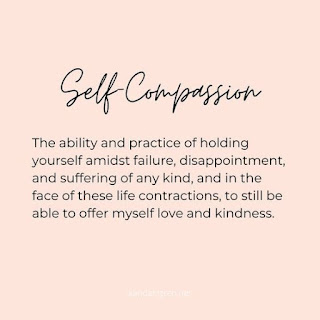
Practice self-compassion: Treat yourself with kindness and compassion, just as you would treat a loved one. Recognize that no one is perfect, and that imperfection is a natural part of being human. Practice forgiving yourself and accepting that your body is unique and beautiful in its way.


Focus on what your body can do: Instead of focusing on what you don't like about your body, focus on the things that your body can do. Be grateful for your body's ability to walk, run, dance, and experience the world around you. By focusing on what your body can do, you can learn to appreciate your body for its strength and resilience, rather than its appearance.


Reframe negative thoughts: When you notice negative thoughts about your body, try to reframe them into more positive, realistic statements. For example, instead of saying, "I hate my stomach," you could say, "My stomach helps me digest food and provides energy for my body. 


Surround yourself with positive influences: Surround yourself with people who accept and appreciate their bodies and who support and encourage you to do the same. This can be friends, family, or online communities. Also, take the time to unfollow social media accounts that make you feel bad about yourself.


Engage in self-care: Self-care involves taking care of your physical, emotional, and mental well-being. By taking care of your body through good nutrition, exercise, and rest, you can show yourself that you value and respect your body. Make time for activities that make you feel good and focus on feeling good rather than achieving a certain look or weight.


Challenge societal beauty standards: Recognize that society promotes unrealistic beauty standards, which can cause feelings of inadequacy and dissatisfaction. Challenge these standards by surrounding yourself with diverse representations of beauty and by celebrating diversity.


Remember, accepting and loving your body is a journey, and it takes time and practice. Be patient and kind with yourself, and celebrate the progress you make along the way. By accepting and loving your body, you can experience greater self-confidence, self-love, and overall well-being. Remember, you are beautiful, and you deserve to love and accept yourself just the way you are.


It is important to recognize that society's beauty standards have been heavily edited and manipulated to fit a narrow definition of beauty. Real beauty comes in all shapes and sizes, and there is no one "perfect" body type. It is essential to celebrate diversity and recognize that our bodies are unique and beautiful in their way.


It is also important to acknowledge that body acceptance and self-love are not easy. It is a journey that can be challenging, and it often involves confronting negative beliefs and thought patterns. Be kind and compassionate with yourself and recognize that this is a process that takes time and effort.


Another helpful strategy is to focus on gratitude. Take time each day to focus on the things you are grateful for, including your body. By focusing on gratitude, you can shift your focus away from negativity and towards positivity and appreciation.


Ultimately, the journey to self-love and body acceptance is about learning to accept and love yourself just the way you are. It is about recognizing your inherent worth and value as a human being and celebrating all that makes you unique. By developing self-love and body acceptance, you can experience greater confidence, happiness, and fulfillment in life.


Remember that you are worthy of love and acceptance, and you deserve to feel good about yourself just the way you are.


Tuesday, March 1, 2022

Self-Love Masterclass #15

Today is one of those days for me. Struggling with my inner critic. That voice that tells me I'm a loser. The voice that says "look at their photos. You aren't that good." The voice that says "It's time to give up and throw in the towel. You're never going to be successful."  Blah. Blah. Blah. 

I know that voice very well. 

It's that nasty Inner Critic. That voice that cries out for failure.
  

*****************************************************************************************

How do we deal with that inner critic?

The private conversations we have with ourselves can be either a powerful step or a major obstacle to reaching your goals.  If your inner voice tells you things like, “I’m going to embarrass myself,” or “No one is going to talk to me,” as you walk you into a party, you probably won't appear relaxed and approachable. Or, if you’re thinking, “I’m never going to get this job,” in the middle of an interview, you'll struggle to present yourself in a confident manner. Often, those negative predictions can quickly turn into a self-fulfilling prophecy.

Our thoughts greatly influence how we feel and behave which can cause negative self-talk to become downright self-destructive. Telling ourselves that we’ll never be successful or that we aren’t as good as other people, will reduce our feelings of self-worth and deter us from facing our fears.

If you tend to be overly critical of yourself, you're not alone. Most of us experience self-doubt and harsh self-criticisms at some point in our lives. Fortunately, we don’t have to be a victim of our own verbal abuse. Instead, we can take steps towards managing our negative thoughts and develop a more productive self-talk. Here are some ways to tame your inner critic:

  1. Develop an awareness of your thoughts. We get so used to hearing our self-talk that it’s easy to become unaware of the messages that we’re telling ourselves. Pay attention to what you’re thinking about and recognize that just because you think something, doesn’t mean it’s true. Our thoughts are often exaggerated, biased, and disproportionate.

  2. Stop overthinking (I know – easier said than done). When you make a mistake or you’ve had a bad day, you may be tempted to re-play the events over and over in your head. But, repeatedly reminding yourself of that embarrassing thing you did, or that questionable thing you said, will only make you feel worse and it won’t solve the problem. When you find yourself overthinking – and not actively problem-solving – don’t waste time telling yourself, “Don’t think about that.” The more you try to avoid thinking about something, the more you’re likely to focus on it. Instead, distract yourself with an activity – like going for a walk, organizing your desk, or talking about a completely different subject – and stop the critical thoughts before they spiral out of control.

  3. Ask yourself what advice you’d give to a friend. If a friend expressed feelings of self-doubt, hopefully you wouldn’t say, “You can’t ever do anything right,” or “You’re so stupid. No one likes you.” Yet, we’re often quick to say those things to ourselves. Instead, you’d be more likely to offer a friend compassionate words of encouragement like, “You made a mistake but it’s not the end of the world,” or “It’s unlikely that today’s performance will actually get you fired.” Treat yourself equally as kind as you’d treat a friend and apply those words of encouragement to your life.

  4. Examine the evidence. Learn to recognize when your critical thoughts are exaggeratedly negative. If you think, “I’m never going to be able to quit my job and run my own business,” examine the evidence that supports and refutes this prediction. Sometimes it’s helpful to write it down. Draw a line down the middle of a piece of paper. On one side, list all the evidence that supports your thought. On the other side, write down all the evidence to the contrary. Looking at evidence on both sides of the argument can help you look at the situation more rationally and less emotionally.

  5. Replace overly critical thoughts with more accurate statements. Convert an overly negative thought to a more rational and realistic statement. When you find yourself thinking, “I never do anything right,” replace it with a balanced statement like, “Sometimes I do things really well and sometimes I don’t.” Each time you find yourself thinking an exaggeratedly negative thought, respond with the more accurate statement.

  6. Consider how bad it would be if your thoughts were true. Sometimes it’s tempting to picture a mistake turning into a complete catastrophe. But often, the worst case scenario really isn’t as bad as we might imagine. For example, if you predict that you’re going to embarrass yourself when you give a presentation, ask yourself how bad would that actually be? If you did embarrass yourself, would you be able to recover or do think it would it end your career? Reminding yourself that you can handle tough times or problems increases your confidence and decreases the constant barrage of worrisome thoughts.

  7. Balance acceptance with self-improvement. There’s a difference between always telling yourself that you’re not good enough and reminding yourself that you can work to become better. Accept your flaws for what they are today but resign to work on the issues you want to address. Although it sounds illogical, you can do both at the same time. You can accept that you experience anxiety in social situations, while also making a decision to become more comfortable with public speaking. Accepting your weaknesses for what they are today doesn’t mean you have to stay that way. Acknowledge that you have flaws but stay determined to remain a work in progress as you strive to become better.

  8. The Power of Your Inner Dialogue Your inner dialogue will either fuel your success or prevent you from reaching your full potential. While your inner critic can help you recognize areas where you want to improve, overly harsh negative self-talk will cause your goals and decisions to suffer and reduce the chances that you’ll reach your goals. Practice taming your inner critic and silencing the negativity so you can coach yourself in a productive and helpful manner.

Our inner critics – whatever we may call them – have a powerful influence over our inner lives. They determine not just our overall psychological well-being, but also how successful we are.

The original function of our critical inner voice was to protect us from danger, but later in life negative self-talk can become a major unhealthy habit with wide-ranging negative consequences. But by noticing and labeling these critical inner voices, and practicing the skills outlined above, we can significantly lessen their effect.

If our inner critic were a person, we would avoid them like the plague. They would no doubt fall into the category of an abuser: someone who consistently tears down our sense of self-worth; someone who mocks, berates, and demeans us; who constantly says the most horrific things about us and makes us feel ashamed, guilty, small, and miserable.

Would we tolerate this kind of talk if it were directed at a child, friend, or someone we love? Why, then, should we accept it as our own normalcy? 

Leave me a comment if you relate. Or if you have managed to overcome your own inner critic. 


Thursday, February 24, 2022

Self Love Masterclass #14

 We are more than our bodies.

Have you looked at photographs of yourself and thought, “OMG. I look so fat. I need to lose weight!”

YOU ARE MORE THAN A BAD PHOTO OF YOURSELF.

And we are more than our physical appearance.

We have developed this terrible tendency of longing after the bodies of other people. We follow excessive fitness and celebrity accounts on Instagram, admire models in magazines and become envious of every Victoria’s Secret model after their annual fashion show. We fixate on our “flaws”, strive to transform our bodies to look exactly like the person we wish we were and hate ourselves when we fall short.

Sad, isn’t it? We’ve become used to loving the bodies of others and have grown to hate our own. I’d be lying if I said I was not guilty of such a thing. For years, I destroyed myself mentally by hating the person I was physically. I’d wake up in the morning, look in the mirror and grab onto my stomach in disgust.

Why can’t I be skinnier? Why can't I look like ‘so and so’?”

The questions were endless and depressing. All of a sudden, I realized that throwing a pity party every day was becoming quite sad, depressing, and unhealthy. I was longing after this “healthy” (translation “perfect”) body, but my mental health took a backseat, as well as my self-esteem. Hating my body wasn't getting me anywhere.

I’ve seen the same happen to plenty of people around me over the years. We want to look a certain way, so we take extreme measures to get there —anorexia, bulimia, self-harm, etc.

When did being healthy mean we had to self-destruct in the process?

Being healthy is not just about having abs, being at an ideal weight and eating salad.

Enjoying life, loving the body you are in (regardless of shape/size/color) and having balance is what makes us healthy.

IT IS TIME TO LOVE YOURSELF!

I cannot stress the importance of that enough. At the end of the day, you are you. We are not the number on the scale. We are not fat or bones or whatever else we may call ourselves.

We are human beings with our own likes, dislikes, goals, talents and much more. Maintaining our physical health is important, but keeping our mental health is the key.

We need to love every part of ourselves — the good, the bad, the pretty, the ugly — unconditionally. No one is perfect, not even the photo-shopped celebrities in the magazines we wish we looked like. If you decide to embark on a health journey or are already on one, understand that it isn’t all about the workouts and the proper nutrition.

Our journey is a chance for us to accept ourselves for all that we are, to better ourselves in ways that we’ve always wanted and to be doing it for the right reasons.

STOP doing things you don’t like, STOP punishing your body for being a body. START living life the way you want and LOVE yourself along the way. There is too much hatred in this world… the last thing you should be doing is adding more.

Here are some tips for increasing self love:

1. Call out what you see

We’re swamped with images these days, most of which have been heavily photo-shopped. A lot of the images we end up comparing ourselves to are not even real bodies. We see ourselves from the moment we wake up, tired and puffy eyed – we only see other people putting their best foot forward. No one is perfect. We all have off-days and we all have things about ourselves we don’t like. Remind yourself of that next time you find yourself comparing yourself to someone else.

2. Choose what you look at

Subliminal messages sneak into our subconscious without us noticing it. On social media, unfollow any of the brands or magazines that imply anyone should ever change themselves or improve their appearance. Fortunately, people are starting to call out this behavior and promote healthier body image with hashtags like #bodypositive. Remember: there is no perfect body or bikini body – there are simply bodies!

3. Start loving your body exactly as it is, however hard it feels

It’s easy to say things like you’re going to feel happier with your body when you get in better shape. But the truth is, you’re much more likely to start treating your body better when you like it. Start working on loving your body first – that’s true self-acceptance. 

4. Be YOU

You don’t have to be perfect, you simply have to be you. And when you’re comfortable being you, then you shine. Being authentic is the most attractive quality there is. Find a vibe or look that makes you feel comfortable and ignore the rest. Trends mis-sell the idea that we have to dress or appear a certain way in order to be attractive. The best thing you can be is you.

5. Celebrate your body as an instrument not an ornament

Run, swim, dance, laugh! Celebrate all the amazing things your body does for you everyday.

6. Indulge your body

Whether it’s a restorative yoga class, a weekly massage or a trip to the nail salon…. Do something different and indulgent that makes you feel good. Eat that steak dinner!

7. Stop your inner critic in its tracks

Most of us are much harder on ourselves than we would ever be with friends. Next time your inner critic rears its ugly head, call it out and make a list of the things you love about yourself instead.

8. Make peace with your body and become friends. 

Speak to your body like you would your best friend. 


Empowering Yourself: Transforming Negative Self-Talk into Positive Affirmations

We all have an inner voice that whispers to us, shaping our thoughts and beliefs about ourselves. However, sometimes that voice can be far f...